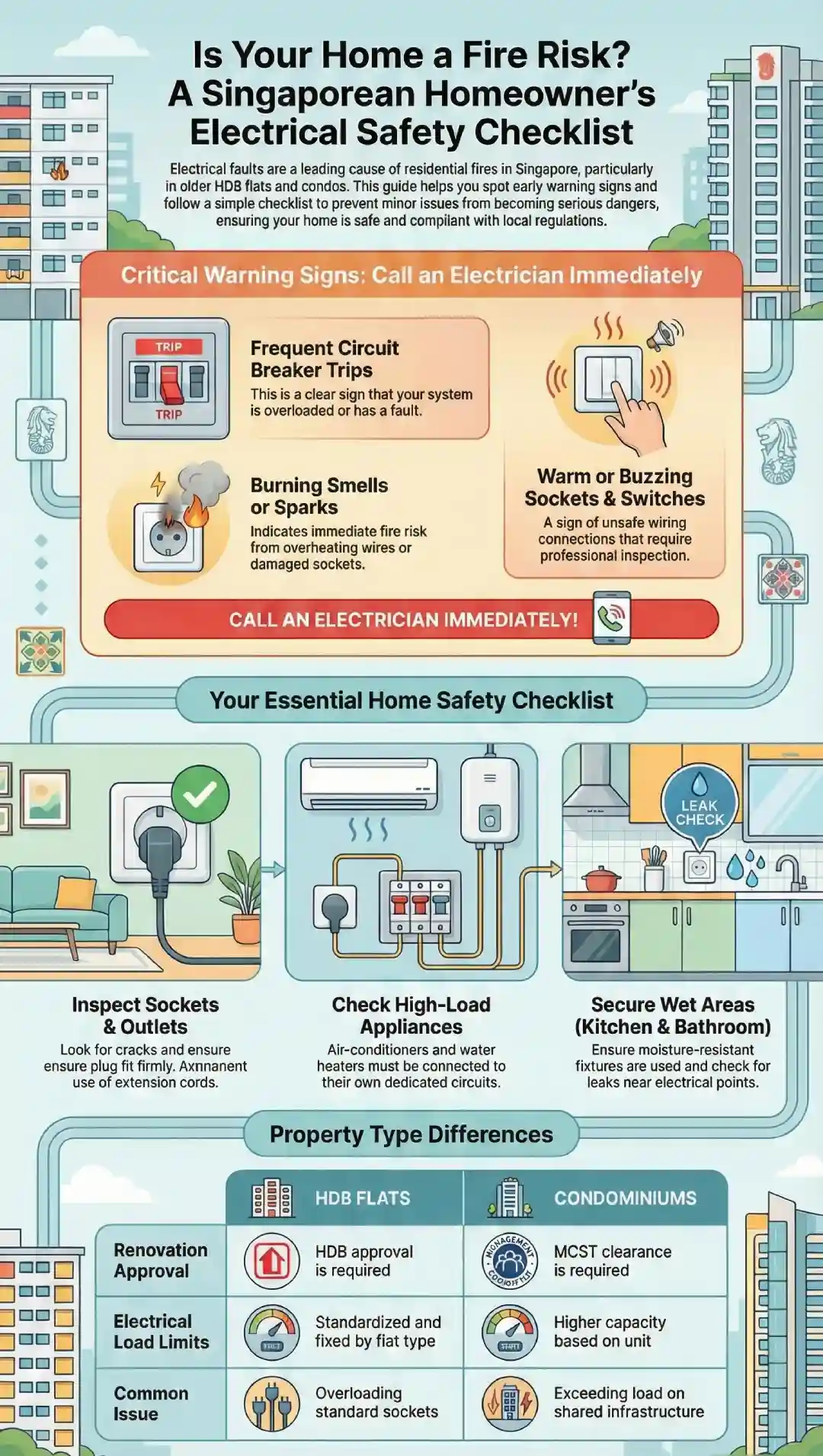
Electrical issues are one of the leading causes of residential fires in Singapore, especially in older HDB flats and heavily used condo units. Many homeowners only think about electrical safety after facing problems like frequent power trips, burning smells, or damaged appliances. By that time, the risk has already increased. This guide is created to help HDB and condo owners spot early warning signs, understand local rules, and follow a clear electrical safety checklist before small issues turn into serious hazards. Whether you live in a new BTO, a resale flat, or a private condominium, this checklist will help you keep your home safe, compliant, and comfortable.
Understanding Electrical Safety Regulations in Singapore
Electrical work in Singapore is strictly regulated to protect residents from fire and electrocution risks. The Energy Market Authority (EMA) controls electrical licensing and safety standards, while all residential electrical work must follow Singapore Standard SS 638. Any major electrical task, such as rewiring, circuit upgrades, or load increases, must be carried out by a Licensed Electrical Worker (LEW).
HDB flats and condominiums also have different approval processes. For example, HDB homeowners must seek approval for electrical changes during renovations, while condo owners often need clearance from the MCST. Ignoring these rules can lead to fines, rejected renovations, or unsafe wiring that fails under load.
| Requirement | HDB Flats | Condominiums |
| Licensed Electrical Worker (LEW) | Mandatory | Mandatory |
| Renovation approval | HDB approval required | MCST approval required |
| Electrical load limits | Fixed by flat type | Based on unit capacity |
| Compliance inspections | Common for resale | Common for renovations |
If you are unsure whether your home meets current electrical standards, a professional inspection from a licensed electrician can help prevent future risks.
HDB vs Condo Electrical Systems: Key Differences Homeowners Should Know
HDB flats are designed with standard electrical layouts and fixed load limits, which means overloading sockets is a common issue, especially in older units. Condominiums usually have higher electrical capacity, but they often include more high-power appliances such as built-in ovens, induction cookers, and multiple air-conditioning units.
Older HDB flats may still have aging wiring that struggles with modern appliance use. Condos, on the other hand, may face issues with shared electrical infrastructure if units exceed approved loads. Understanding these differences helps homeowners apply the right safety checks for their property type instead of using a one-size-fits-all approach.
How Often Should Electrical Safety Checks Be Done in Singapore Homes?
Regular inspections help identify problems early. For most homes in Singapore, a full electrical safety check should be done every 3 to 5 years. However, certain situations require more frequent checks:
- Homes older than 15 years
- Flats with frequent circuit breaker trips
- After major renovations
- Before moving into a resale HDB or condo
- Homes with heavy appliance usage
If you notice sparks, buzzing sounds, or warm switches, do not wait for the next scheduled inspection. These are signs that immediate attention is needed.
Why Preventive Electrical Checks Save Money and Reduce Risk
Many homeowners delay inspections to avoid costs, but minor electrical repairs are far cheaper than emergency fixes or fire damage. A simple socket replacement or circuit adjustment can prevent appliance damage and protect your family. Preventive checks also reduce downtime, especially for families working from home.
For homeowners who want peace of mind, booking a routine inspection with a trusted local service like Handyman Services Singapore ensures that checks are done according to local rules and safety standards. Booking a routine inspection with a trusted local service like Handyman Services Singapore ensures that checks are done according to local rules and safety standards.
Complete Electrical Safety Checklist for HDB and Condo Owners
A practical electrical safety checklist helps homeowners inspect their living space in a clear and organized way.
Main Electrical Panel and Circuit Breakers
The electrical panel is the control center of your home’s power supply. In many HDB flats, the panel is located near the main door, while condos may have it hidden inside a utility cabinet. Circuit breakers are designed to cut power automatically when there is overload or short-circuiting. If breakers trip often, it is a warning sign that the system is under stress.
- Homeowners should check for:
- Breakers that trip frequently
- Burn marks or unusual smells near the panel
- Poor or missing circuit labels
- Heat buildup around the switchboard
Frequent tripping often means too many appliances are connected to one circuit. This is common in homes with multiple air-conditioners or kitchen appliances. A licensed electrician can rebalance the load or upgrade circuits safely, which reduces long-term risk. A licensed electrician can rebalance the load or upgrade circuits safely through our electrical services in Singapore, which reduces long-term risk.
Power Sockets and Light Switch Safety Check
Loose or damaged sockets are one of the most overlooked electrical risks in Singapore homes. Over time, socket contacts wear out due to constant use, especially in living rooms and bedrooms where extension cords are used heavily.
Look out for:
- Loose plugs that do not fit firmly
- Sparks when plugging in appliances
- Cracked or yellowing socket covers
- Warm switches after use
Using multi-plug adapters for permanent connections is unsafe and commonly seen in older HDB flats. Each wall socket has a load limit, and exceeding it can cause overheating. Replacing old sockets and installing additional power points is a safer long-term solution.
Electrical Wiring Condition and Hidden Fire Risks
Electrical wiring runs behind walls and ceilings, which makes problems difficult to spot until damage occurs. Older HDB flats may still have wiring that was installed decades ago and not designed for modern power needs. Signs of wiring issues often appear slowly.
Warning signs include:
- Flickering lights
- Power loss in specific rooms
- Burning smells without visible damage
- Buzzing sounds from switches
Aluminum wiring, which was used in some older buildings, is more prone to overheating. If your flat is over 20 years old, a wiring inspection is strongly recommended. A professional rewiring assessment helps identify risks before insulation breaks down. According to recent SCDF fire statistics, electrical faults remain one of the top two causes of residential fires in Singapore.
Lighting Fixtures and Ceiling Wiring Safety
Lighting problems are often dismissed as minor, but they can point to deeper electrical issues. Flickering lights may indicate loose wiring or overloaded circuits. Ceiling downlights, especially older halogen types, can generate high heat if insulation clearance is poor.
Key safety checks include:
- Secure light fittings
- Proper clearance around downlights
- Moisture-resistant fixtures in bathrooms
- No exposed wiring near ceilings
Switching to LED lighting reduces electrical load and heat output. This simple upgrade lowers energy usage and reduces fire risk, especially in false ceilings. This simple upgrade lowers energy usage and reduces fire risk, especially in false ceilings, and can be handled by our lighting installation team.
Air Conditioning and High-Load Appliance Safety
Air-conditioners, water heaters, ovens, and induction cookers draw large amounts of electricity. In Singapore homes, air-conditioning systems should always be connected to dedicated circuits to avoid overloading.
Important checks:
- Dedicated circuit for each air-conditioner
- Water heaters connected through isolation switches
- No extension cords for heavy appliances
- Stable power supply without sudden shutdowns
Overloaded circuits can cause gradual wiring damage, even if the breaker does not trip immediately. If you notice air-conditioners shutting off or breakers tripping during use, the system likely needs upgrading.
Wet Area Electrical Safety in Bathrooms and Kitchens
Bathrooms and kitchens are high-risk areas due to water exposure. Electrical fixtures in these spaces must meet safety ratings to reduce shock hazards.
- Essential safety measures include:
- Proper earthing for all appliances
- Residual Current Devices (RCDs) installed
- IP-rated switches and lights
- Secure water heater connections
Water heaters should always be checked for leakage near electrical points. Any signs of corrosion or loose wiring require immediate attention. For families with children or elderly members, this area should never be ignored.
Smoke Detectors, Surge Protection, and Fire Prevention
Smoke detectors are now mandatory in all Singapore homes. They act as an early warning system during electrical fires, especially those that start inside walls or ceilings.
- Fire prevention essentials:
- Working smoke alarms in key areas
- Surge protectors for sensitive electronics
- Fire extinguishers in kitchens
- Clear access to the electrical panel
Power surges caused by lightning or grid issues can damage appliances. Surge protectors help prevent costly losses and reduce electrical stress.
Common Electrical Safety Mistakes Made by Homeowners
Many electrical accidents happen due to simple mistakes that seem harmless. Understanding these habits helps prevent unnecessary risk.
Common mistakes include:
- DIY electrical repairs without proper training
- Using non-certified electrical products
- Overloading extension cords
- Ignoring early warning signs
Electrical work should always be handled by trained professionals. Attempting repairs without proper knowledge can cause hidden damage that leads to serious incidents later.
When to Call a Licensed Electrical Worker in Singapore
Certain electrical tasks are legally required to be done by a Licensed Electrical Worker. This includes rewiring, circuit upgrades, and major appliance installations. Handymen without proper licensing should not handle these tasks.
You should call a licensed professional if:
- Power trips frequently
- You smell burning near switches
- Appliances cause electric shocks
- You are planning renovations
Professional services from handyman Services Singapore ensure that all work meets Singapore safety standards and protects your home from long-term risk.
Frequently Asked Questions About Electrical Safety in Singapore Homes
Is electrical inspection mandatory for HDB flats?
Electrical inspections aren’t required for everyday living in HDB flats but are mandatory during major renovations to comply with safety codes. They’re strongly advised for older flats (20+ years) and resale units to detect wiring issues, avoid fines, and ensure insurance coverage.
Can I repair electrical sockets myself?
No, repairing electrical sockets yourself is unsafe and illegal in Singapore, risks include shocks, fires, and non-compliance with PUB standards. Always use licensed electricians registered with HDB for proper earthing and polarity checks.
How much does electrical rewiring cost in Singapore?
HDB rewiring costs SGD 3,000–8,000, varying by flat size (e.g., 3-room vs 5-room) and age, older units need full upgrades. Get multiple quotes from licensed pros; it boosts safety and resale value.
Are extension cords safe for permanent use?
Extension cords are for temporary use only; permanent reliance overloads circuits, melts wiring, and risks fires in humid climates. Install proper wall sockets via licensed contractors instead.
How long does HDB electrical wiring last?
HDB wiring lasts 20–30 years with good maintenance, but older aluminum types degrade faster. Regular checks every 5–10 years prevent failures in high-usage homes
Final Thoughts: Keeping Your HDB or Condo Electrically Safe
Electrical safety is a shared responsibility among homeowners, family members, and licensed professionals. Small checks done regularly can prevent major incidents and protect both property and lives. By following this electrical safety checklist and acting quickly on warning signs, HDB and condo owners can enjoy a safer living environment.
If your home has not been inspected recently or you are planning renovations, scheduling a professional electrical check is a smart and responsible step. Reliable services from handyman Services Singapore help ensure your home remains safe, compliant, and comfortable for years to come.